



| Check | What to observe | What to record |
|---|---|---|
| Floor | Undertone, texture, and sheen | What must remain unchanged |
| Daylight | Color calmness and warmth | Which tone comes forward |
| Evening light | Reflection and contrast | What changes under artificial light |
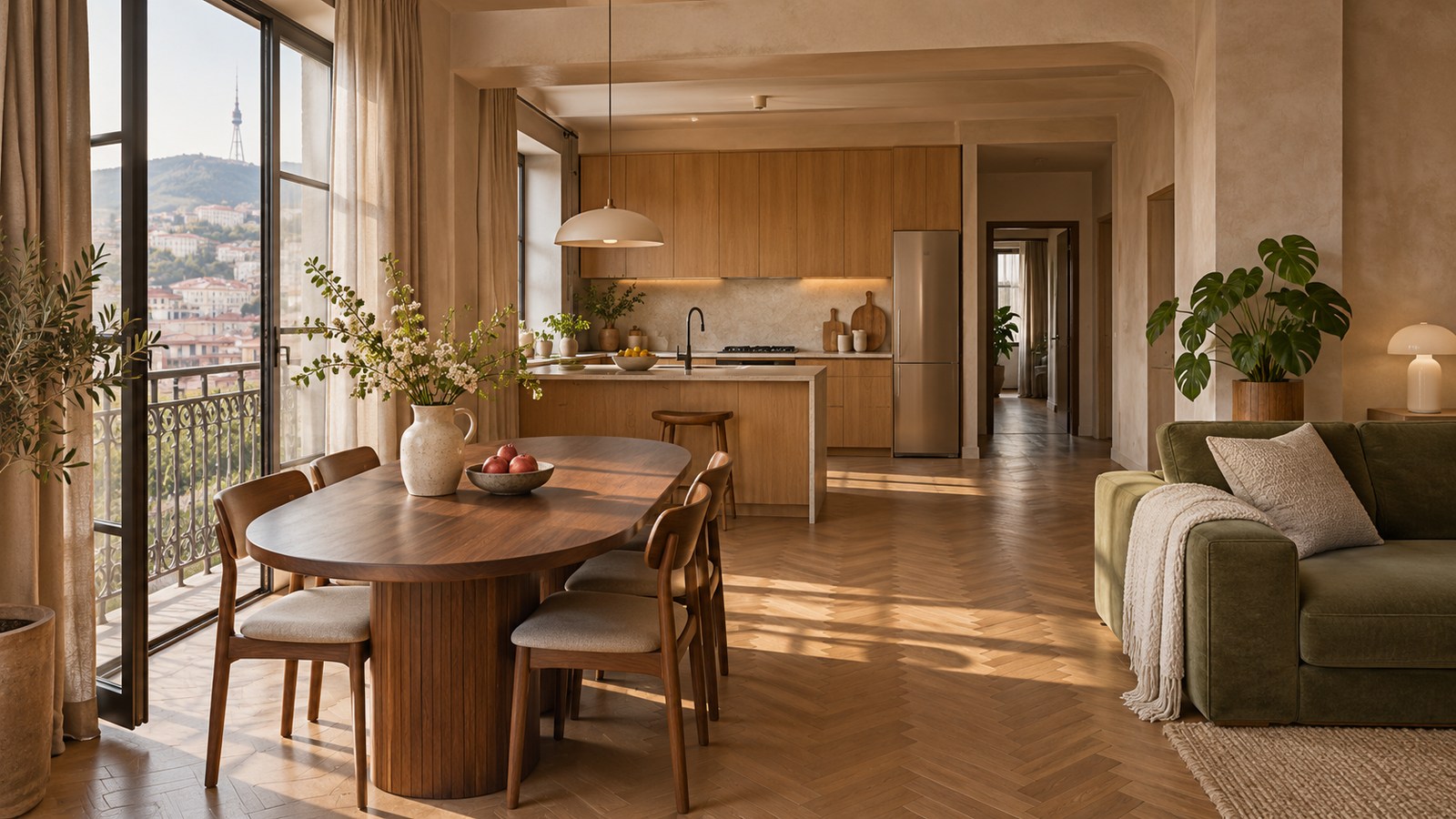
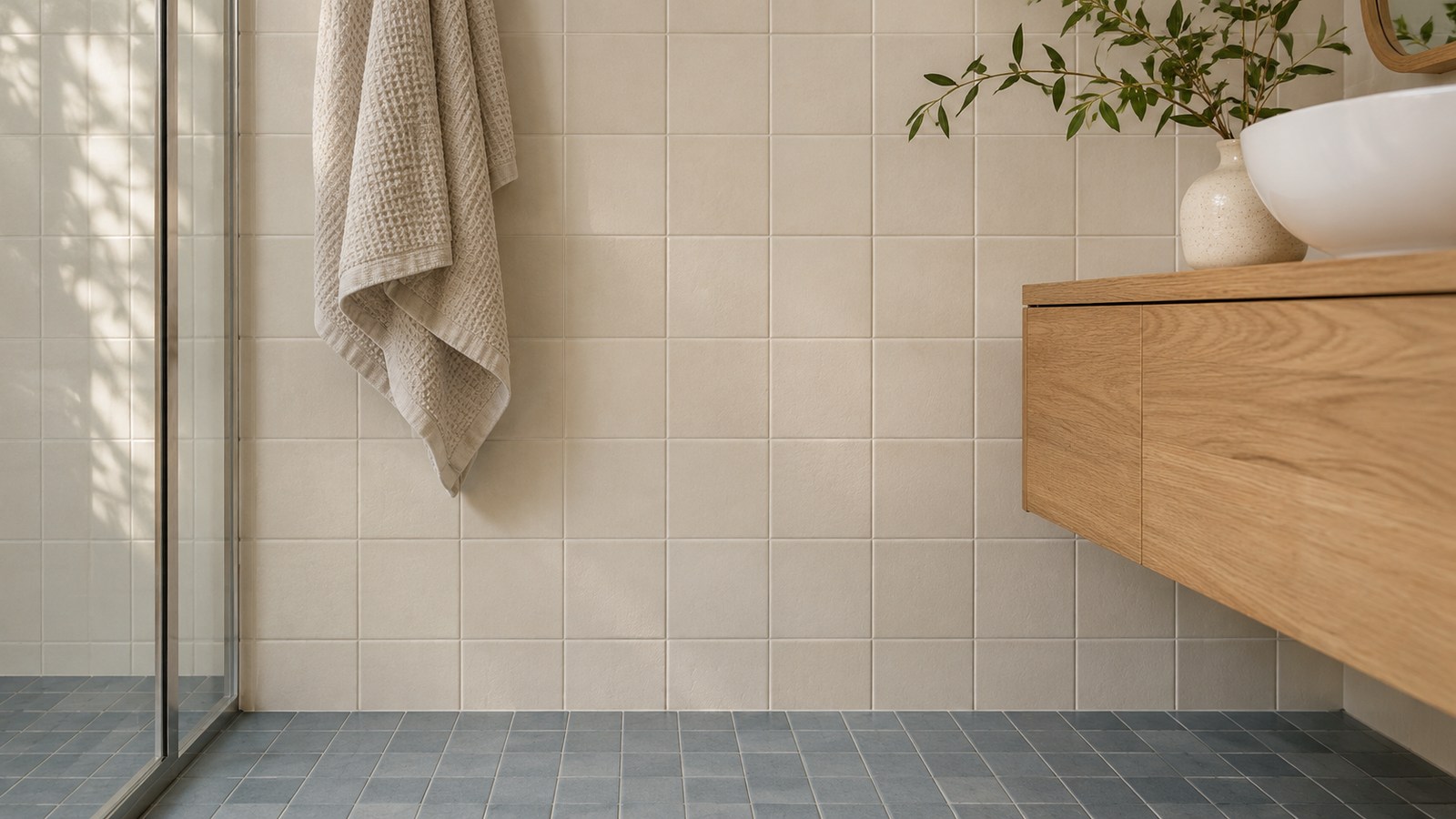
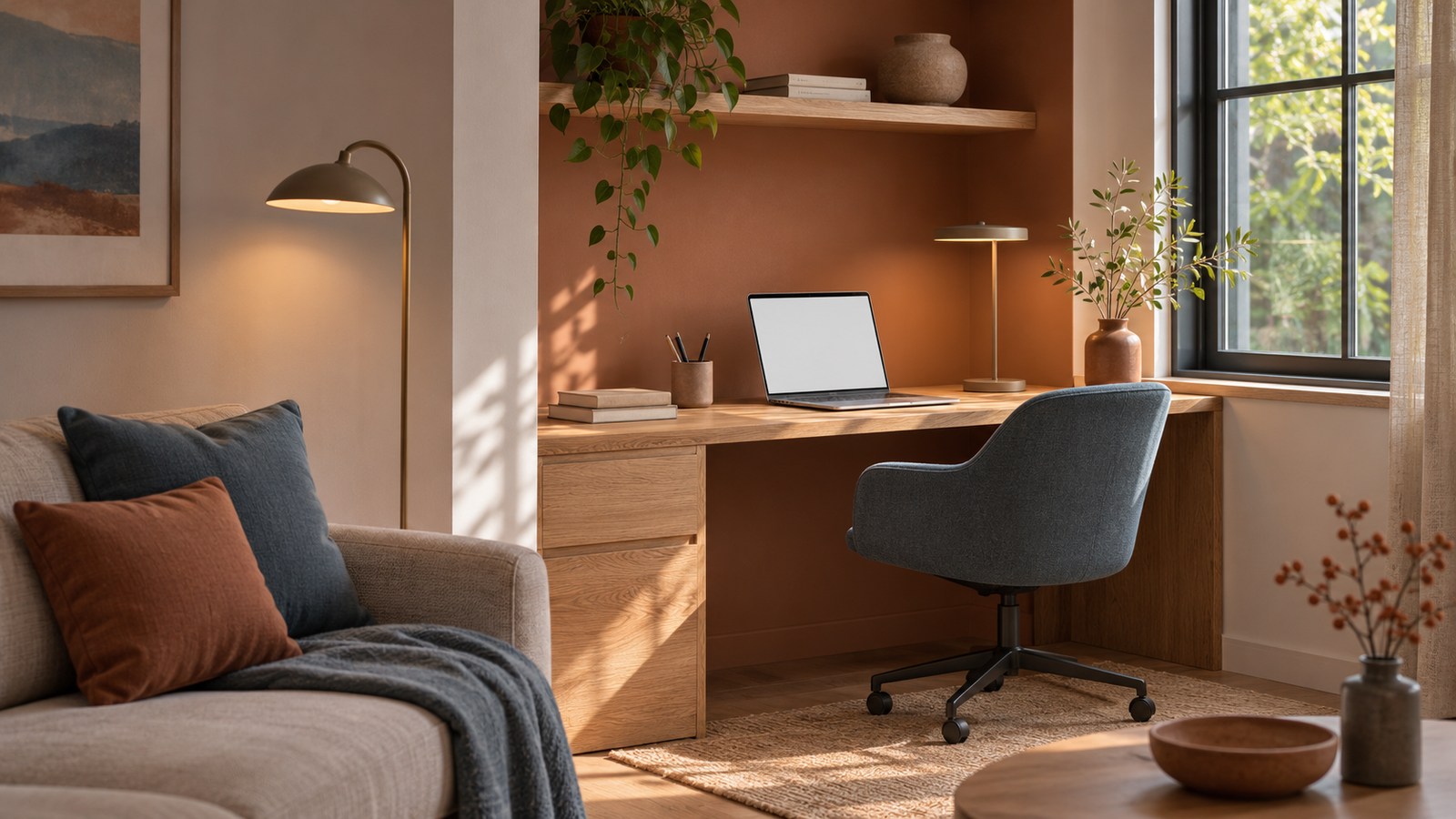
Direct answer: When the floor will stay, do not choose a wall color from the screen alone: compare the sample in the real space in daylight and evening light. First identify the warm or cool undertone in the floor, then place several real samples beside it and record which color does not clash with the existing material in either condition. Use the Mshenoveli interior generator for an initial visual direction, but connect the final color decision to an on-site sample check.
- The floor is the unchanged starting color and texture.
- View the wall sample separately in daylight and evening light.
- The screen visual shows a direction, but cannot replace the real surface.
The existing floor frames the wall-color choice
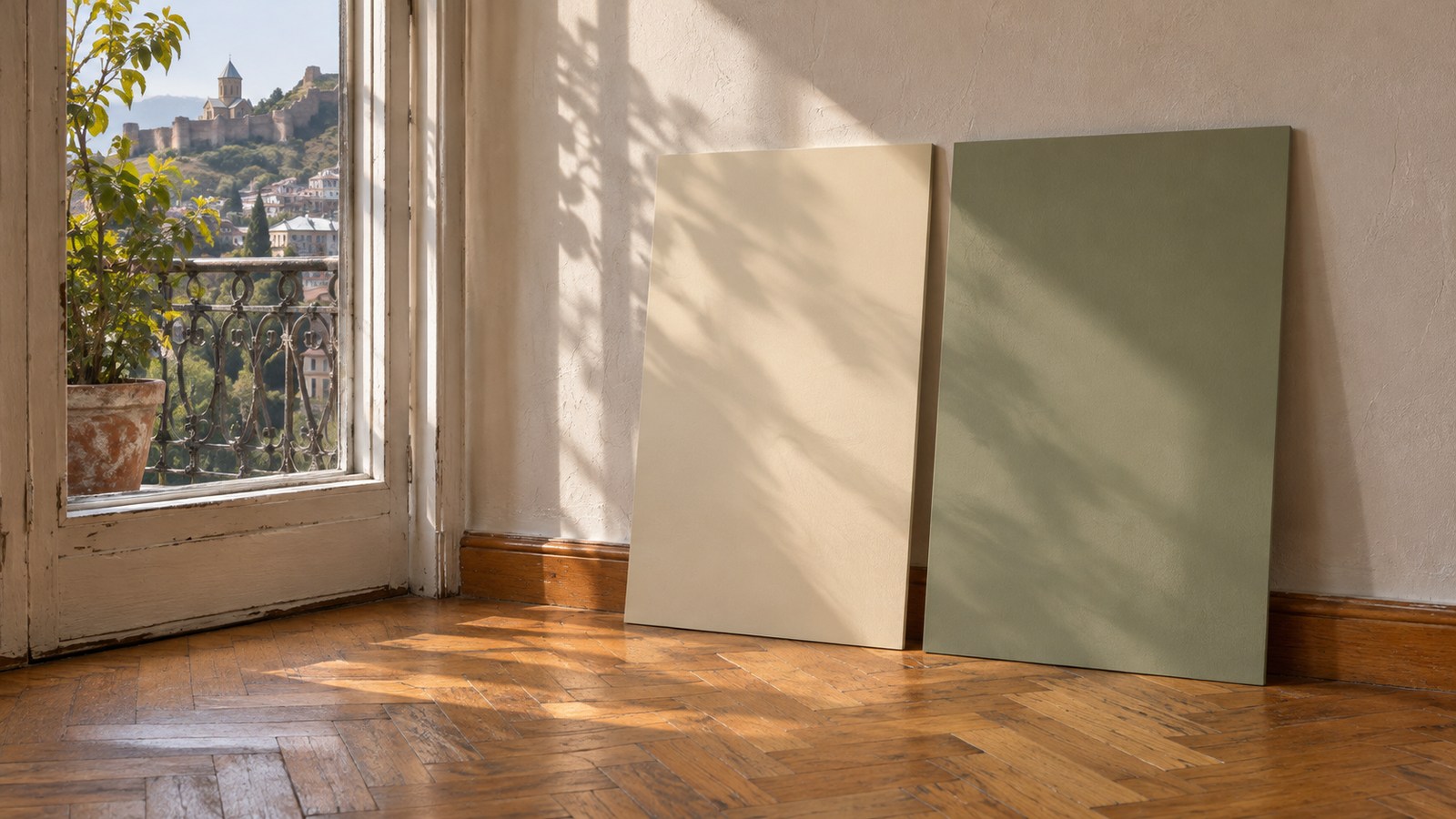
The existing floor is the first comparison surface when choosing a wall color, because replacing it is no longer planned. Look not only at whether the floor is light or dark, but also at whether it has a yellow, red, gray, or green undertone. A wall color may look beautiful on its own but, next to the floor's constant tone, make the room feel too cool, too yellow, or too heavy.
Start the choice with a small floor sample or photographs of the same surface. A photograph is only an initial record. Texture, sheen, and shadow create a different relationship on site, so the final candidate should be checked on the actual wall or on a suitably large sample. The generator does not have a function for precisely matching a floor or paint sample by uploading it, and cannot guarantee that the final appearance of the existing surface will remain unchanged.
Compare the sample separately in daylight and evening light
Sherwin-Williams' eight-tip guide says to check color in different lighting throughout the day, because natural and artificial light can change how a color is perceived. The same page suggests applying a color patch on site. This is especially important when the floor remains and the wall color will be seen beside it every day.
Sherwin-Williams' guide also connects the perception of undertones with the direction of light and the type of lamp. The practical conclusion is simple: bright morning light, a cloudy afternoon, and an evening lamp can show the same sample differently. So the question should not be only, “Do I like this color?” Ask yourself which quality changes when the light changes and whether that change is acceptable.
A field note for checking color on site
When checking a sample, record the floor tone, wall candidate, lighting condition, and surface effect separately. This prevents you from confusing a color change with a lighting change.
- Floor record: Describe the existing material as it actually appears, not only by its catalog name.
- Choose samples: Select at least two candidates that respond to the floor's undertone in different ways.
- Location: View the sample on the same wall side where the color will ultimately be used, not only under a store's white lighting.
- Daylight record: Note what happens in natural light and which undertone comes forward.
- Evening record: Turn on the light you will use every day and compare the same sample.
- Acceptance rule: Move the color to the next stage only when it meets your requirement in both conditions and the remaining questions are recorded separately.
For example, two samples may look almost identical in the morning, but in the evening one may intensify the floor's warm undertone. That does not mean the color is automatically bad. It means the choice should be based on the room's real lighting, with questions about surface sheen, wall preparation, and the specific material left open separately.
Illustrative scenario: one floor, two wall samples
Imagine an apartment where a warm wood-colored floor has already been approved and replacing it is no longer part of the plan. This is an illustrative scenario, not a client case. The first sample looks calm gray on the screen, but under a warm evening lamp it intensifies the floor's yellow undertone. The second sample is slightly more neutral in daylight and does not create a sharp conflict between the wall and floor in the evening.
The correct decision here is not that “the second color is best for everyone.” The correct conclusion is that the remaining floor determines the comparison method. If evening life in the room matters more, record the second sample's advantage and leave the questions about surface sheen, wall preparation, and the specific material open separately.
Surface effect: Sherwin-Williams' guide to color and sheen samples recommends comparing different surfaces in the space, during the day and at night. The same color does not read identically on a matte and a glossier surface, because the amount of reflected light changes. This is not only an aesthetic detail: the surface can make a color undertone or the visual weight of the wall more noticeable.
So include the surface type in the sample record, not only the color name. If the final material has not yet been selected, leave it as an unknown. An AI visual direction can help organize this choice, but a physical sample is still needed to see how the wall color meets the existing floor.
What a screen visual cannot tell you
A screen image cannot confirm that a specific paint tone will be exactly the same on your wall. The screen, room lighting, floor texture, sample size, and surface sheen all differ. You also cannot see how the color will change when curtains, furniture, or an artificial light are added to the room.
Keep the selected sample, observations from both lighting conditions, and the questions that require a specific material or on-site check in the final record. This makes the visual concept a starting point for the decision rather than an unverified promise about the color.
Frequently asked questions
How can I make sure a wall color works with an existing floor?
Compare the floor sample and wall candidate in the same space during the day and in the evening, then record the observations from both conditions separately.
Can a screen visual replace a color sample?
A screen visual is useful for an initial direction, but it cannot replace the relationship between a real floor and wall sample on site.
Related topics
Next step: Photograph the existing floor, prepare two candidates, and check both in daylight and evening light. Then use the Mshenoveli interior generator to record an initial direction.
AI disclosure: this text was prepared with AI assistance; the example is illustrative and does not describe a client result.